Published: December 10, 2025
In this article, you will learn how the EU Entry/Exit System (EES) fundamentally transforms border management for non-EU travelers and why robust, integration-ready identity document verification technology is essential for businesses developing compliant solutions.
Introduction to the EU Entry/Exit System (EES)
The EU Entry/Exit System (EES) is an automated IT system that registers the entry and exit of travelers from non-EU countries at the external borders. It applies to travelers who require a visa for a short stay and to non-EU citizens who are exempt from the visa requirement. The EES is replacing the stamping of passports and provides reliable data on border crossings and enables the effective detection of overstayers.
The imminent implementation creates immediate market opportunities for businesses that can deliver compliant border control solutions, self-service kiosks, mobile pre-registration applications, and integrated travel management systems.
What is the EU Entry/Exit System (EES) and who is affected?
The EU Entry/Exit System EES affects travelers from over 60 visa-exempt countries and all visa-required nations, fundamentally changing how border authorities track and verify entries and exits across all EU external borders. This system mandates the collection of biometric data and comprehensive travel information from every non-EU traveler, creating universal requirements that impact airports, seaports, and land border crossings throughout the Schengen Area.
Organizations and businesses that can rapidly deploy reliable identity document verification capabilities will gain significant competitive advantages in securing contracts with border authorities, airports, and travel service providers.

Why the EES Matters now: The Rollout and its Implications
The ongoing rollout creates urgent demand for technology solutions that enable compliant data collection while maintaining efficient passenger flow and positive traveler experiences. Businesses positioned to deliver these solutions quickly will capture substantial market share in a landscape where border authorities and travel operators must adopt new systems across hundreds of locations simultaneously.
System integrators and solution providers require proven, integration-ready SDKs that reduce development risk and accelerate deployment timelines.

Data Collection Under EU Entry/Exit System (EES)
The EU Entry/Exit System (EES) mandates the collection of facial images and fingerprints from travelers, alongside comprehensive travel documentation including entry and exit dates, border crossing locations, and personal information from travel documents. All collected data flows into a centralized EU database that border authorities across member states can access in real-time to verify traveler identities, track overstays, and identify security risks.
Types of Data Collected (Biometrics, Travel Dates, Personal Information)
Biometric requirements include facial images and fingerprints from all travelers, which must be captured with high accuracy and linked reliably to the traveler’s identity document to ensure system integrity and prevent identity fraud. Biographical data encompasses all information fields from travel documents, entry and exit timestamps, and border crossing locations, creating comprehensive travel records for each non-EU national. The system’s effectiveness depends entirely on the accuracy and security of the initial data capture, placing extraordinary demands on the identity document verification technologies that feed information into the central repository.
Centralized EU Entry/Exit System (EES) Database and Access Control
The centralized database architecture enables border authorities across all member states to instantly verify traveler histories, detect overstays, and identify individuals of interest through shared access to standardized records. This interconnected system requires that every entry point delivers consistently formatted, accurate data, making the reliability of front-end identity verification technology a critical success factor for the entire framework. Organizations building EES-compliant solutions must ensure their systems produce data that meets centralized database specifications while maintaining the processing speed necessary for high-volume border environments.
The Role of Mobile Identity Document Verification in EES Compliance
Mobile identity document verification technology serves as the critical foundation for EES-compliant solutions, enabling automated extraction of biographical data, validation of document authenticity, and confirmation that presented documents meet security standards. These technologies support multiple deployment scenarios, from self-service border control kiosks that expedite passenger processing to mobile applications allowing travelers to pre-register their information before arrival.
Why Mobile Identity Document Verification SDKs Matter for Border Control and Travel Applications
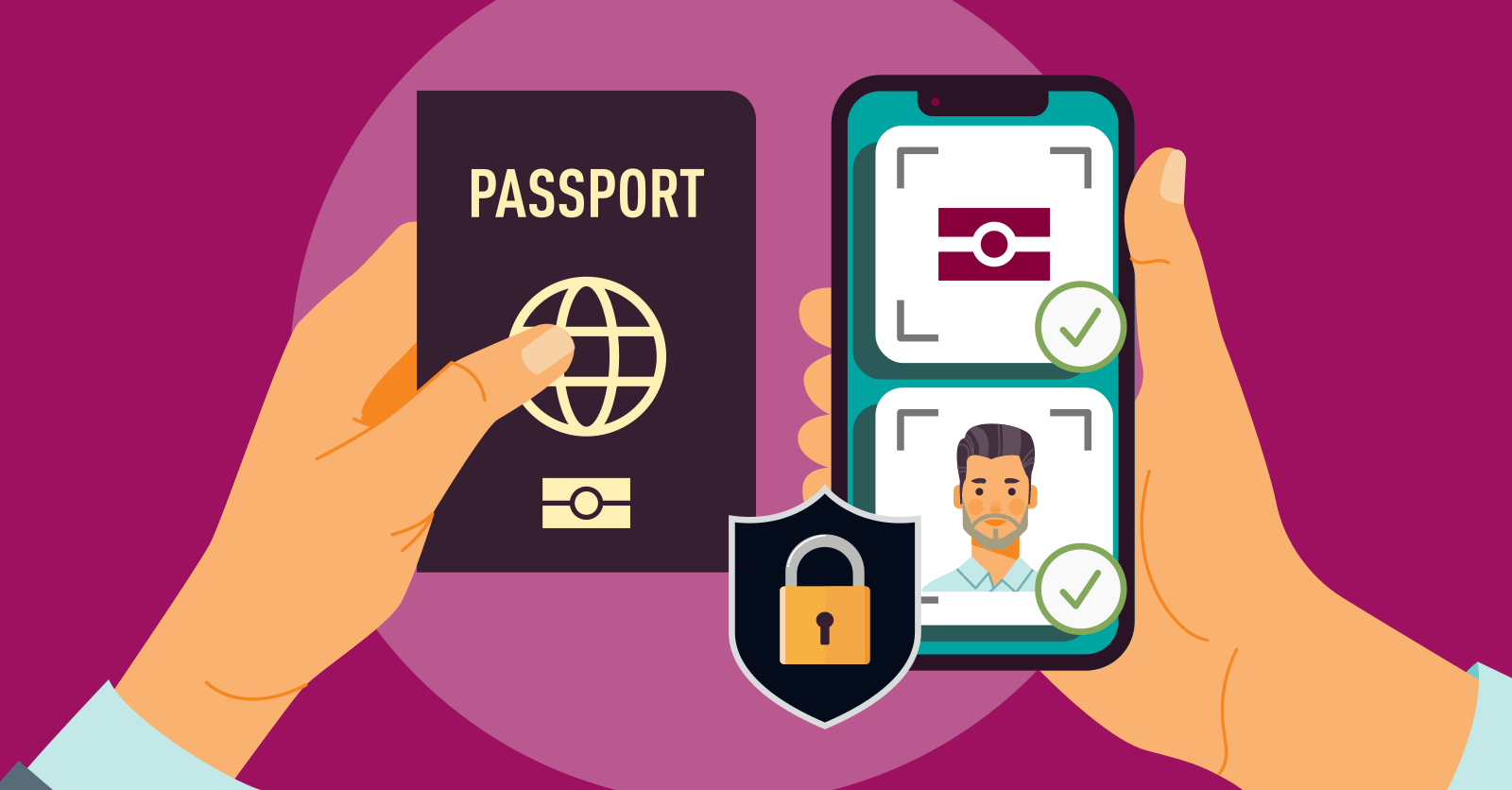
Identity document verification SDKs eliminate the manual data entry and visual inspection processes that create bottlenecks, reduce accuracy, and increase operational costs in traditional border control environments. By automating document capture, data extraction, and authenticity verification, these technologies enable businesses to deliver solutions that process higher passenger volumes while maintaining superior accuracy compared to human-dependent approaches.
The SDK approach of kinegram.digital provides businesses with pre-built, tested functionality that dramatically reduces development time and technical risk compared to building identity document verification capabilities from scratch.
Use Cases: Airport Kiosks, Mobile Apps, pre-registration Systems

Self-service kiosks equipped with identity document verification technology allow airports to process non-EU travelers efficiently while collecting all required EES data without expanding border control staff. Mobile applications enable travelers to complete pre-registration by scanning their documents and submitting required information before arrival, distributing processing load and reducing queue times at physical border crossings. Additional deployment scenarios include airline check-in systems that must verify travel authorization, hotel registration platforms requiring identity confirmation, and car rental operations managing cross-border movements within the Schengen framework.
kinegram.digital SDKs: Comprehensive Identity Document Verification
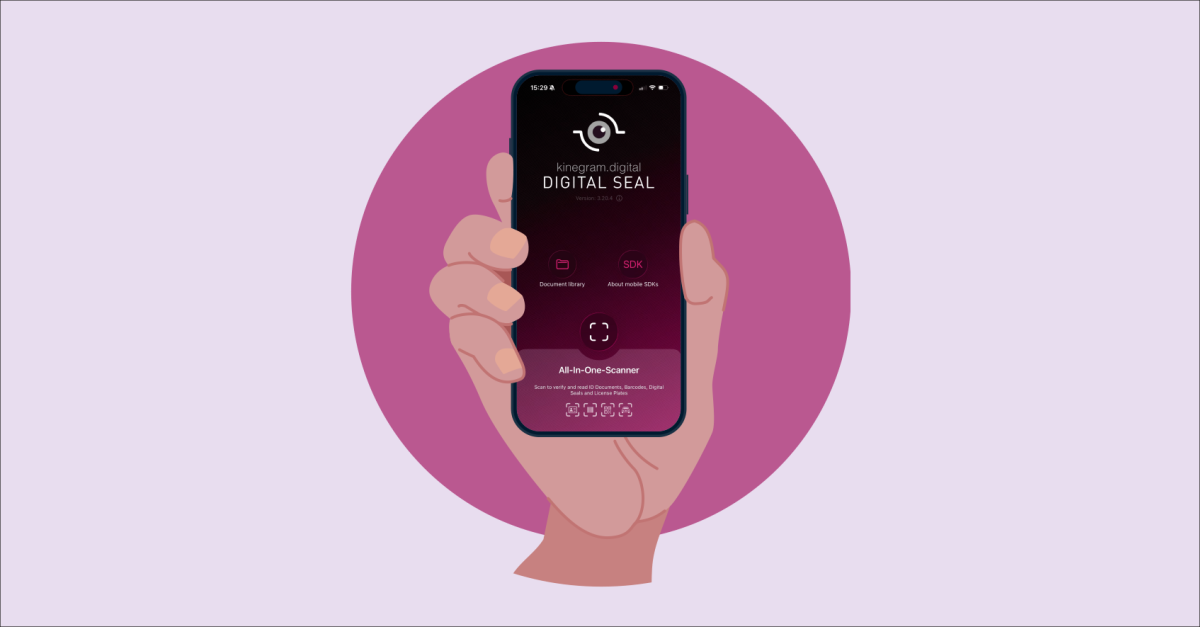
kinegram.digital offers a complementary portfolio of mobile SDKs that address all dimensions of identity document verification required for EES compliance. Deploying the MOBILE SCAN SDK and the MOBILE CHIP SDK creates a comprehensive identity document verification architecture that validates physical security features, extracts biographical data, and accesses cryptographically protected chip information for the highest level of authentication.
MOBILE SCAN SDK: Advanced Scanning Technology for Rapid and Secure Data Capture
The MOBILE SCAN SDK provides production-ready technology for the fast, secure and error-free data scanning and returning. Built to seamlessly integrate into existing apps and workflows, the MOBILE SCAN SDK ensures rapid and secure data capture, also in mobile, offline environments. This SDK delivers immediate business value by reducing manual verification workload, minimizing human error in document assessment. Integration-ready architecture enables businesses to implement document scanning capabilities within weeks rather than months, accelerating time-to-market for EES solutions.
MOBILE CHIP SDK: NFC Chip Reading From ePassports, Accessing Digitally Signed Biometric Data, Chip Authentication Methods
The MOBILE CHIP SDK enables businesses to extract the digitally signed biometric data embedded in modern ePassport chips, providing access to the official facial image stored by the issuing authority. This technology implements chip authentication protocols that verify document authenticity, confirming that the chip has not been tampered with or cloned and that the document was genuinely issued by the stated authority.
How Both SDKs Work Together for Complete Identity Document Verification
The MOBILE SCAN SDK reads data from MRZ, while the MOBILE CHIP SDK accesses the cryptographically protected chip data, creating a multi-layered verification approach. This combined architecture enables solutions that meet the most stringent border control requirements while maintaining the processing efficiency necessary for commercial viability, giving businesses a competitive advantage in delivering comprehensive EES-compliant systems.
The complementary nature of both SDKs allows organizations to implement baseline scanning capabilities initially and add chip reading functionality as requirements evolve, providing deployment flexibility while maintaining a consistent technical foundation.
Technical Integration and Compliance Considerations
kinegram.digital’s SDK portfolio is specifically engineered to fulfill EES data collection mandates, supporting automated extraction of all required biographical fields, facilitating biometric capture workflows, and providing the document authentication capabilities that border authorities demand. The integration-ready architecture and enterprise-grade security protocols enable businesses to build solutions that meet GDPR requirements and satisfy the data protection standards that EU border authorities mandate.
How kinegram.digital SDKs Meet EU Entry/Exit System (EES) Requirements
The SDKs support extraction of all biographical data fields mandated by EES regulations, including name, date of birth, nationality, document number, and validity dates, with accuracy levels that meet border authority specifications.
The integration-ready architecture reduces development complexity and accelerates deployment timelines, enabling businesses to focus resources on application-specific features rather than underlying document verification technology.
Data Security During Transmission and Storage
The SDK architecture incorporates enterprise-grade security protocols that protect sensitive biometric and biographical data throughout the verification process, from initial capture through transmission to backend systems. Encryption standards and secure data handling practices embedded within the SDKs ensure that businesses can build solutions meeting GDPR requirements and the stringent data protection standards EU border authorities mandate for systems interfacing with the centralized EES database. This security foundation reduces compliance risk and accelerates security certification processes that solution providers must complete before deploying systems in operational border environments.
Accelerate Your EES Solution Development
kinegram.digital invites CEOs and technology decision-makers to explore how our proven identity document verification SDKs can accelerate your EES solution development and strengthen your competitive position in this expanding market. Our technical teams are prepared to discuss integration approaches, demonstrate SDK capabilities, and outline implementation pathways tailored to your specific business requirements.
Discover how our SDKs can Strengthen Your EES Solution
kinegram.digital invites CEOs and technology decision-makers to explore how our proven identity document verification SDKs can accelerate your EES solution development and strengthen your competitive position in this expanding market. Our technical teams are prepared to discuss integration approaches, demonstrate SDK capabilities, and outline implementation pathways tailored to your specific business requirements.
Secure Your Competitive Advantage Today
The EES implementation window is closing rapidly, and businesses that delay technology selection risk missing critical market opportunities as border authorities finalize procurement decisions.
Complete the contact form now to arrange an immediate demonstration of our SDK portfolio and position your organization ahead of competitors still evaluating their technology options.
Learn more on EU Entry/Exit System (EES) Solutions

© OVD Kinegram AG
Imprint | Privacy Policy | Image credits
Privacy Notice | Terms and Conditions
LinkedIn Youtube