Mastering KYC Verification
A Practical Hub for KYC Verification, eKYC, and Document Verification Know-How

Stefan Gabriel
Head of Digital Solutions
Head of Digital Solutions
Published: April 27, 2026
KYC verification and eKYC (electronic KYC) mean the set of processes and checks used to confirm a customer’s identity and support risk decisions, especially during remote customer onboarding. In practice, KYC verification combines policy, process, and technology: collecting identity data, validating identity evidence (often through KYC document verification), linking identity evidence to the customer, decision-making, and ongoing monitoring.
This hub explains Know Your Customer (KYC) verification, outlines the typical eKYC verification process, and offers further reading on KYC details and related topics, such as identity proofing and ID document verification for KYC.
KYC (Know Your Customer) is a mandatory compliance framework to fulfil legal requirements for financial and other regulated entities to identify customers, assess risks, perform ongoing monitoring, and meet ongoing regulatory obligations. It is also often adopted by businesses and organizations offering digital services that require identification and onboarding of customers.
KYC verification is the operational set of checks performed to confirm that a customer is who they say they are, typically at the onboarding stage and again if risk triggers require an update.
eKYC (electronic KYC) refers to conducting KYC verification through digital channels, commonly as part of remote customer onboarding. eKYC solutions rely on internet-enabled identity data capture and KYC document verification solutions, such as high assurance NFC chip verification, and additional checks; depending on individual regulatory expectations and risk categorizations.
KYC verification typically includes identity proofing as a building block. For definitions and online methods, see Identity Proofing: Definition, Online Methods, Solutions.
KYC is crucial for financial instutitions, fintechs, regulated businesses, governments and any other entity that seeks to build trust, prevent fraud, and comply with regulations. Effective KYC processes are essential for ensuring security while delivering a smooth customer experience. This hub will explore key themes related to KYC verification and remote customer onboarding, including insights into best practices and technologies that can help organizations safeguard their operations and optimize onboarding in a fast-evolving environment.
It is designed for:
You will learn:
A defensible KYC verification process is usually risk-based, i.e., it relates to how an organization identifies and manages customer risk. A typical process model could look like this:
In this series of articles, you will learn the importance of mastering Know Your Customer (KYC) verification for effective identity proofing and client onboarding. The articles emphasize how businesses can enhance trust, reduce fraud, and comply with regulations through strategic KYC processes. It covers key areas such as:
A taxonomy and guide to identity proofing vs identity verification vs identity authentication, online identity proofing, how proofing supports eKYC.

A seamless KYC process during onboarding can improve customer satisfaction by minimizing friction and making the registration process as smooth as possible.
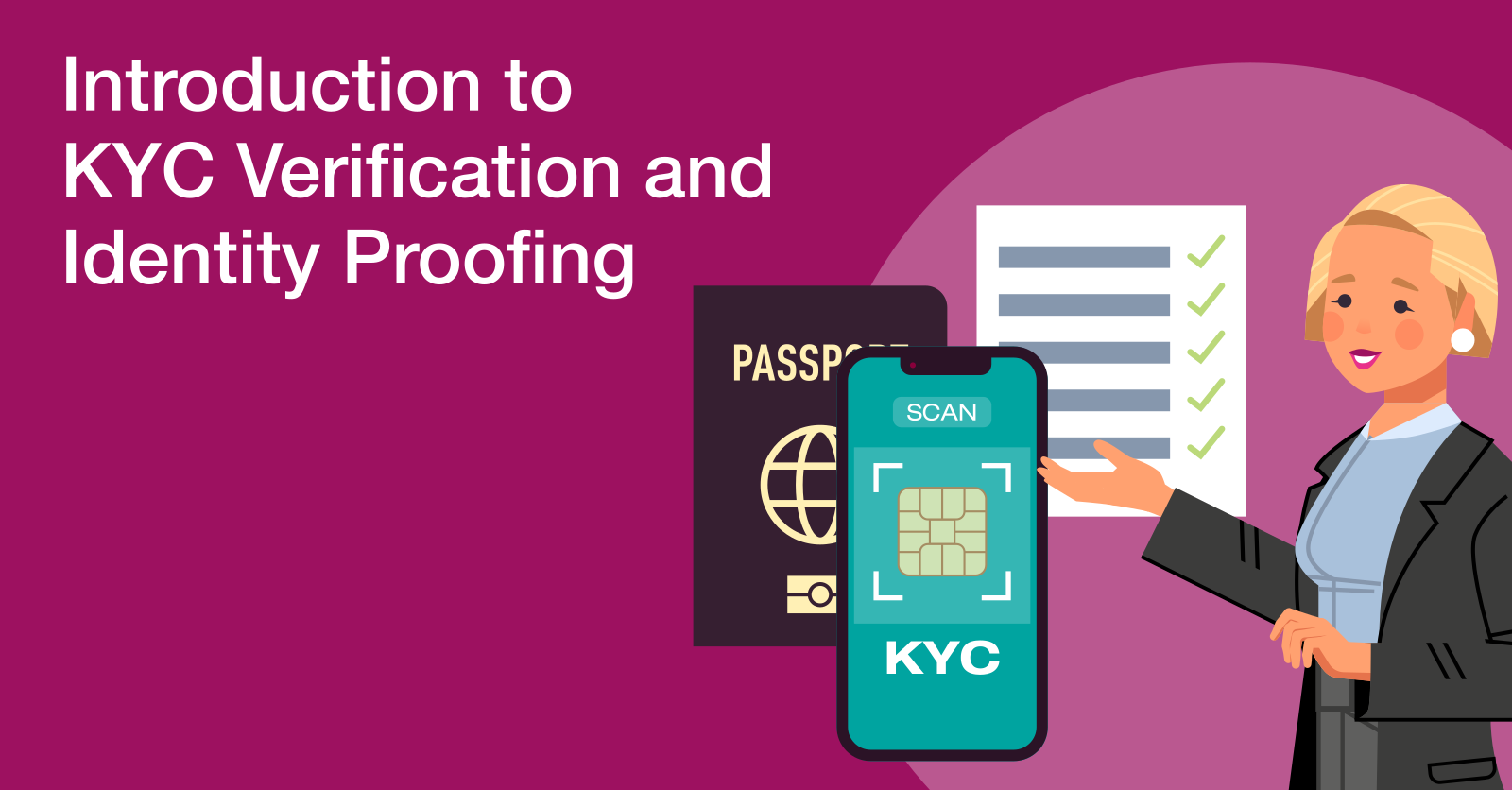
Enhancing accuracy and security in KYC verification and identity proofing, from traditional methods like document validation to advanced digital tools such as biometric data, MRZ (Machine-Readable Zone) reading and chip verification.

Workflow and best practices: By focusing on user experience and utilizing cutting-edge technology, businesses can create an onboarding process that not only meets regulatory standards but also fosters long-term customer relationships.

What chip verification strengthens, how it supports KYC processes, and how it fits into eKYC stacks.
The evolving landscape of KYC – AI fraud, evolving requirements, biometrics, electronic IDs, and contactless verification. What are the practical implications for remote onboarding and how can businesses stay compliant.

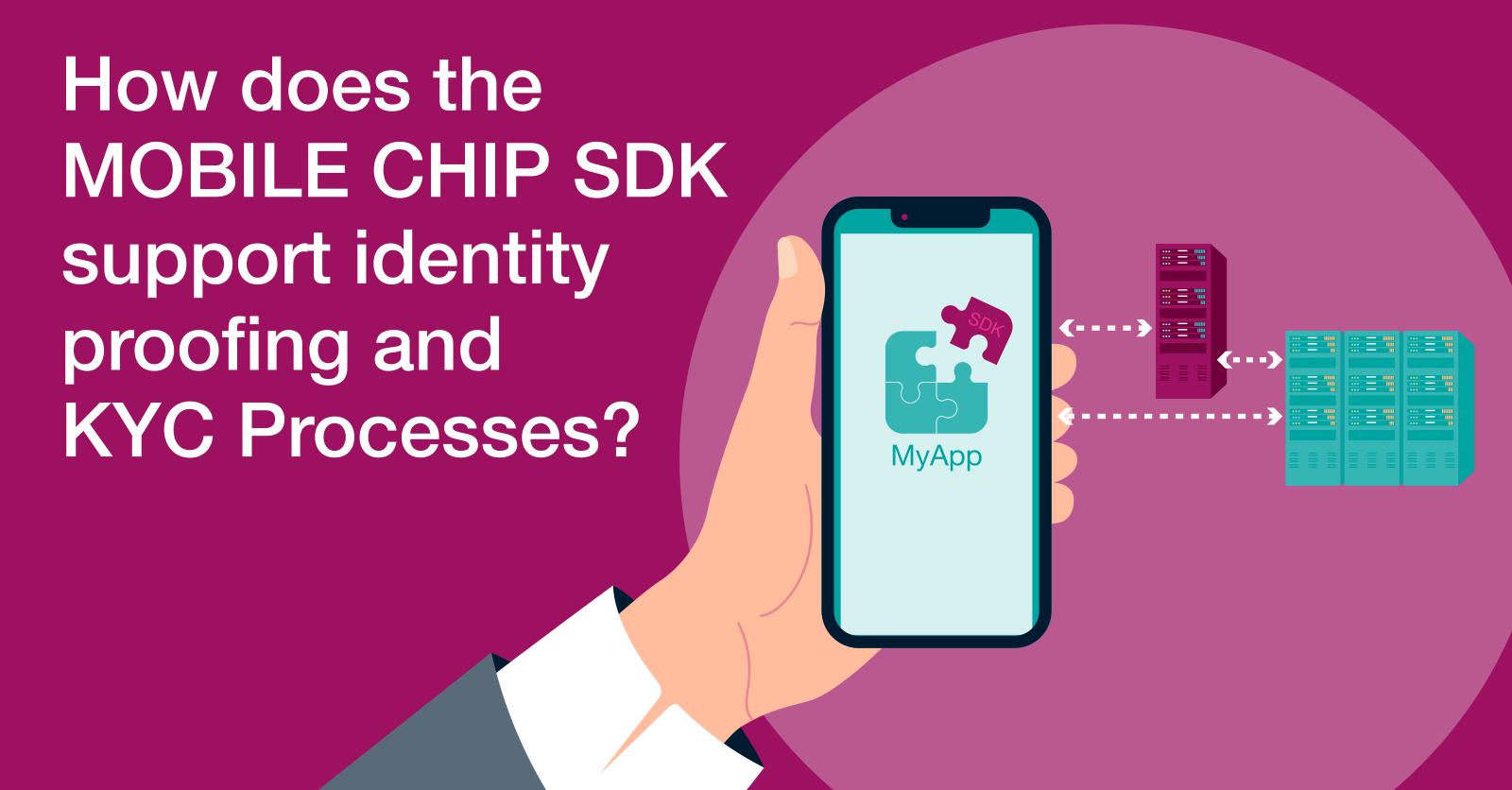
A focus on NFC chip verification in KYC workflows and how the MOBILE CHIP SDK, a cutting-edge tool for automating KYC verification, can accelerate remote customer onboarding, improve operational efficiency, and reduce costs.

KYC verification is not only a regulatory requirement but also a strategic business tool that can enhance risk management, improve operational efficiency, and boost market reputation, ultimately driving long-term success.


What is KYC?
KYC (Know Your Customer) is a framework of policies and controls that are used to identify customers, assess risks, and meet legal obligations, especially in regulated industries such as financial institutions. It typically includes onboarding checks and ongoing monitoring.
What is the meaning of KYC verification?
KYC verification is the operational set of checks used to confirm a customer’s identity and support risk decisions under a KYC program. It commonly includes identity proofing as the onboarding control, plus decisioning, recordkeeping, and refresh procedures.
What is the KYC verification process?
A typical KYC verification process is risk-based and lifecycle-driven. It entails the definition of policy and risk requirements, the collecting of customer information, identity proofing at the onboarding stage, applying risk assessment and decision-making, the keeping of records for audit and dispute purposes, and ongoing monitoring for eventual KYC refreshes.
What is eKYC (electronic KYC)?
eKYC (electronic KYC) means conducting KYC verification through digital channels, often as part of remote customer onboarding. In many cases, eKYC relies on identity proofing steps performed remotely, supported by strong evidence validation and appropriate audit trails.
What documents are acceptable for online identity verification?
Accepted documents for online identity verification depend on the jurisdiction, industry, and policy. Commonly accepted documents include government-issued credentials such as passports, national ID cards, and driver’s licenses. The most reliable online identity verification processes use electronic machine-readable travel documents (eMRTDs), which can securely be verified with chip-based verification.
What are the best KYC verification services or KYC verification software?
This depends on the individual use case and risk profile. The approach should support the required assurance level, offer a reliable onboarding user experience, include strong evidence validation, and come with audit-ready records and a privacy-by-design setup. In practice, many organizations are best advised to combine a KYC verification software platform with specialist components, such as an MRZ reader or scanner to avoid manual data entry plus an NFC chip verification for eMRTDs.
Explore kinegram.digital’s MOBILE CHIP SDK for NFC chip verification of eMRTDs, supporting KYC and remote customer onboarding processes: MOBILE CHIP SDK reads and verifies chip data of ID documents
Contact us for more information!

© OVD Kinegram AG
Imprint | Privacy Policy | Image credits
Privacy Notice | Terms and Conditions

 NFC Chip Reading SDK for High-Assurance Digital Identity Verification